
Monthly utility bills can feel like a slow, unceasing leak in your household budget. When energy costs spike, many homeowners resort to temporary fixes: turning down the thermostat until everyone is shivering, unplugging the toaster when it is not in use, or turning off a single lightbulb. While these habits are well-intentioned, they rarely move the needle in a meaningful way.
To achieve permanent, dramatic reductions in your monthly expenditures, you must shift your perspective from passive conservation to strategic investment. Your home is an interconnected ecosystem of structural boundaries, mechanical systems, electrical infrastructure, and water pathways. When one part of this system is inefficient, every other part works harder, consuming more fuel, electricity, and water.
Investing in targeted property upgrades allows you to optimize this ecosystem. High-ROI upgrades lower your baseline consumption, insulate your finances from unpredictable energy market volatility, and simultaneously increase the structural integrity and market value of your property. By turning your attention to the structural and mechanical foundations of your home, you can stop managing high utility bills and start eliminating them.
Block Hidden Drafts around Entryways and Windows

The term “thermal envelope” refers to the physical barrier separating the conditioned interior air of your home from the unconditioned outdoor elements. When this envelope is compromised by minor gaps, cracks, and structural shifts, your home suffers from continuous air infiltration and exfiltration. In essence, you are paying to heat or cool the neighborhood.
Minor structural movements over time can cause doors and windows to shift out of alignment. When a door does not sit perfectly flush within its frame, the original weatherstripping can no longer compress adequately to seal out the elements. Prioritizing door repairs to realign hinges, fix warped frames, and install heavy-duty sweep seals can halt significant energy loss.
Furthermore, these tiny structural gaps do more than just let in chilly winter drafts or humid summer air; they also act as invitations for pests seeking shelter. When homeowners fail to seal the exterior perimeter, they often end up spending money on pest control services to handle infestations that could have been prevented entirely by tight structural seals. Combining energy-efficiency upgrades with preventative sealing creates a double layer of financial protection for your household.
To successfully find and fix these hidden leaks on your own, consider the following actionable steps:
- The Flashlight Test: On a dark night, have one person stand outside while you pass a bright flashlight along the interior edges of your doors and windows. If light shines through to the outside, air is actively escaping.
- The Dollar Bill Trick: Close a door or window on a dollar bill. If you can pull the bill out easily without any resistance, the seal is far too loose and the weatherstripping must be replaced.
- Silicone Caulk Application: Use a high-grade silicone caulk to seal stationary gaps around exterior window frames, plumbing penetrations, and where the foundation meets the wood framing of the home.
Optimize Attic Ventilation and Prevent Roofing Degradation
While vertical walls and entryways are prone to drafts, the absolute greatest point of thermal exchange in any home is the roof. During the summer, radiant heat from the sun beats down on your shingles, driving attic temperatures upward. If your attic lacks adequate insulation and ventilation, this intense heat migrates down through your ceilings, forcing your air conditioning to run continuously.
In the winter, the reverse occurs: precious heat rises from your living spaces into the attic. If it escapes through the roof, it melts the snow above, which then refreezes at the cold eaves, creating destructive ice dams. Maintaining the structural integrity of your roof prevents water from degrading your attic insulation.
Moist insulation loses its R-value rapidly, turning a protective thermal barrier into a useless, damp mess. Staying on top of minor roof repairs—such as replacing damaged shingles, sealing leaky flashing around chimneys, and ensuring attic soffit vents remain completely unobstructed—keeps your insulation completely dry and fully functional year-round.
Match Equipment Capacity to Your Home’s Unique Square Footage

Heating and cooling make up the vast majority of residential energy consumption. Unfortunately, many homes rely on systems that were poorly planned or incorrectly sized during initial construction. A common misconception is that a larger heating and cooling system is inherently better. In reality, an oversized system will cycle on and off rapidly, a phenomenon known as short-cycling.
Short-cycling prevents the system from ever reaching its peak operational efficiency, puts immense mechanical strain on components, and fails to properly dehumidify the air during summer months. True efficiency requires a comprehensive approach to heating system design that accounts for your home’s total square footage, regional climate zones, insulation levels, and window orientations.
When a system is perfectly calibrated to the specific thermal load of your property, it runs in longer, smoother cycles that consume far less fuel and electricity. If your existing furnace is more than fifteen years old, it is likely operating at an Annual Fuel Utilization Efficiency (AFUE) rating of 60% to 70%, meaning a massive portion of your money is literally going up the exhaust flue.
By investing in modern furnace installation services, you can upgrade to a modulating, variable-speed system boasting an AFUE rating of up to 98%. This ensures that nearly every penny you spend on heating fuel is converted directly into comfortable, consistent warmth for your family.
Establish a Preventative Maintenance Schedule with Trusted Professionals
Even the most advanced, high-efficiency climate control system will suffer a dramatic drop in performance if it is neglected. A build-up of dust on an evaporator coil, a slightly miscalibrated thermostat, or an unbalanced blower motor can easily spike your monthly energy consumption by 10% to 15%.
To protect your investment and keep your monthly bills as low as possible, establish an ongoing relationship with a qualified HVAC company. Professional technicians have the specialized diagnostic tools required to measure precise airflow, check refrigerant charges, and test electrical draw across all internal components.
To keep your climate control systems running at peak thermodynamic efficiency between professional visits, implement these maintenance strategies:
- Change Filters Monthly: A clogged air filter restricts airflow, forcing the system blower motor to work twice as hard and consume significantly more electricity to move the same volume of air.
- Clear Exterior Debris: Maintain a minimum two-foot clearance around your outdoor condenser unit. Clear away leaves, tall grass, weeds, and overhanging branches to ensure completely unrestricted heat rejection.
- Clean the Condensate Drain: Flush your system’s drain line with a cup of regular white vinegar every few months to prevent algae buildup, which can cause system shutdowns and costly water damage.
Capitalize on Rooftop Power and Local Energy Incentives
Once you have minimized your home’s energy consumption by sealing drafts and upgrading your HVAC machinery, the next logical step is to address where your power comes from. Generating your own clean energy on-site allows you to bypass rising utility company rates entirely.
With modern solar installations, you can transition your property from a pure consumer of expensive grid electricity into a self-sustaining power plant. Any excess electricity your panels generate during peak daylight hours can be fed back into the local grid, turning your electric meter backward through net metering programs.
The financial return on clean energy generation has never been more attractive. When evaluating the long-term ROI of a rooftop energy system, keep these factors in mind:
- Federal and State Tax Credits: Take full advantage of available government incentives, which can slice the total upfront installation cost by 30% or more through direct tax credits.
- Property Value Appreciation: High-quality solar infrastructure increases your home’s overall equity and market appeal without increasing your property taxes in many jurisdictions.
- Battery Storage Integration: Pairing your rooftop array with a modern lithium-ion backup battery allows you to store daytime power and use it during evening peak-pricing hours when utility rates are highest.
Modernize Your Panel to Support High-Efficiency Smart Technology
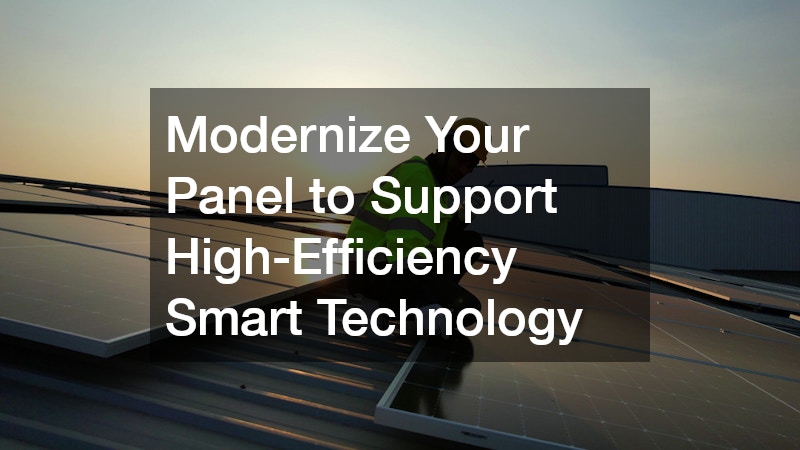
Many homeowners dream of installing a solar array, a fast electric vehicle charging station, or an ultra-efficient air-source heat pump, only to discover their home’s electrical infrastructure cannot handle the load. Older homes frequently rely on outdated 100-amp electrical panels that are already running near maximum capacity.
To safely support high-ROI energy upgrades, you need to hire licensed electricians to assess your system and upgrade your service panel to 200 amps or more. This foundational upgrade ensures your home can safely distribute power to modern, heavy-load, energy-efficient appliances without risking overloaded circuits or electrical fires.
Furthermore, updating your electrical panel allows for the integration of smart circuit breakers. These advanced devices give you real-time data on exactly which appliances, electronics, or entertainment systems are drawing the most power. Armed with this precise information, you can pinpoint “phantom loads”—devices that draw electricity even when turned off—and program automated schedules to cut power to those circuits entirely when your family is asleep or at work.
Keep Major Kitchen and Laundry Units Operating at Peak Performance
Appliances represent a substantial percentage of your home’s daily electricity and gas consumption. Refrigerators run 24 hours a day, while clothes dryers, washing machines, and dishwashers demand massive amounts of thermal and mechanical energy to clean and dry your household items.
When these units begin to fail or suffer from neglected maintenance, their internal motors, pumps, and heating elements must work much longer cycles to achieve the desired results. Rather than rushing out to replace a major unit at the first sign of poor performance, targeted appliance repair can often restore an older machine to its original factory efficiency for a fraction of the cost.
To optimize your major household appliances, consider these high-impact maintenance fixes:
- Refrigerator Coil Maintenance: Vacuum the dust from your refrigerator’s condenser coils twice a year to prevent the compressor from running hot, and replace brittle door gaskets to keep cold air trapped inside.
- Dryer Airflow Optimization: Clean out the internal lint trap after every load and perform a thorough annual cleaning of the exterior dryer vent piping to prevent restricted airflow from forcing double drying cycles.
- Dishwasher Filtration Clearing: Periodically remove food debris from the bottom filter and clear the small water spray arm nozzles to keep the unit from running inefficiently, and run a maintenance cycle with white vinegar to dissolve mineral buildup.
By taking a proactive approach to appliance maintenance, you ensure that every kilowatt-hour of electricity pulled from your wall outlets translates directly into productive work, rather than wasted heat and mechanical strain.
Restore Plumbing Flow to Reduce Water Heating and Pumping Strain

When homeowners think about lowering utility bills, they often forget about the water bill and the immense energy required to heat that water. A slow drain or a partially obstructed pipe might seem like a minor daily annoyance, but it creates a compounding negative effect on your utility expenses.
When wastewater cannot exit your home efficiently, it leaves behind standing water that cools down your pipes. This forces your water heater to expend significantly more energy to deliver hot water to your showers, sinks, and appliances. Investing in professional drain cleaning clears out hidden grease, hair, and scale buildup, restoring optimal flow dynamics throughout your entire plumbing system.
With your main lines running completely clear, you can introduce high-efficiency water fixtures that permanently lower both your water consumption and your water heating bills:
- Low-Flow Showerheads: Replace outdated showerheads with modern, engineered low-flow models that utilize air-injection technology to maintain excellent water pressure while reducing overall hot water consumption by up to 40%.
- Smart Water Heaters: Transition away from old tank-style water heaters that continuously reheat water all day and night. Hybrid heat pump water heaters or tankless on-demand models only heat water when you actively turn on a tap, eliminating standby energy losses.
- Faucet Aerators: Install inexpensive, high-efficiency aerators on your kitchen and bathroom faucets to limit water flow to 1.5 gallons per minute or less without sacrificing performance.
Maximizing the energy efficiency of your home is not a matter of making drastic sacrifices to your personal comfort. Instead, it is about taking a systematic approach to structural, mechanical, and electrical property upgrades. By sealing your thermal envelope, updating your climate control equipment, generating your own clean power, and optimizing your appliances, you can structurally lower your household operating expenses for decades to come.
Every single upgrade you make acts as a shield against inflation and rising utility costs. While these projects require an initial layout of capital, the compounding monthly savings will quickly pay back your investment, eventually turning into pure profit. Take a close look at your property, prioritize the upgrades that will deliver the fastest returns for your specific layout, and take control of your household utility costs once and for all.
About the Author